Managing perimenopausal hair loss — compounded by rapid weight loss.
A real, GP-led case: a holistic approach to hormonally-driven hair thinning, combining full medical assessment with exosome-based regenerative therapy.
First published by DermaFocus (Regenerative Aesthetics).
Hair loss in midlife women is common yet under-recognised. The perimenopausal transition brings fluctuating, ultimately declining oestrogen, relative androgen predominance, metabolic change and heightened physiological stress — together disrupting the hair-growth cycle and causing diffuse thinning, finer hair and increased shedding. It is rarely driven by one thing alone.
In recent years, GLP-1 medications for weight management have added another dimension: rapid weight loss is a well-documented trigger for telogen effluvium. Against a background of perimenopausal change, the combined effect on hair density — and on how a patient feels — can be profound. A single-modality, purely cosmetic approach is often not enough; a GP-led strategy that treats the whole picture is more appropriate.
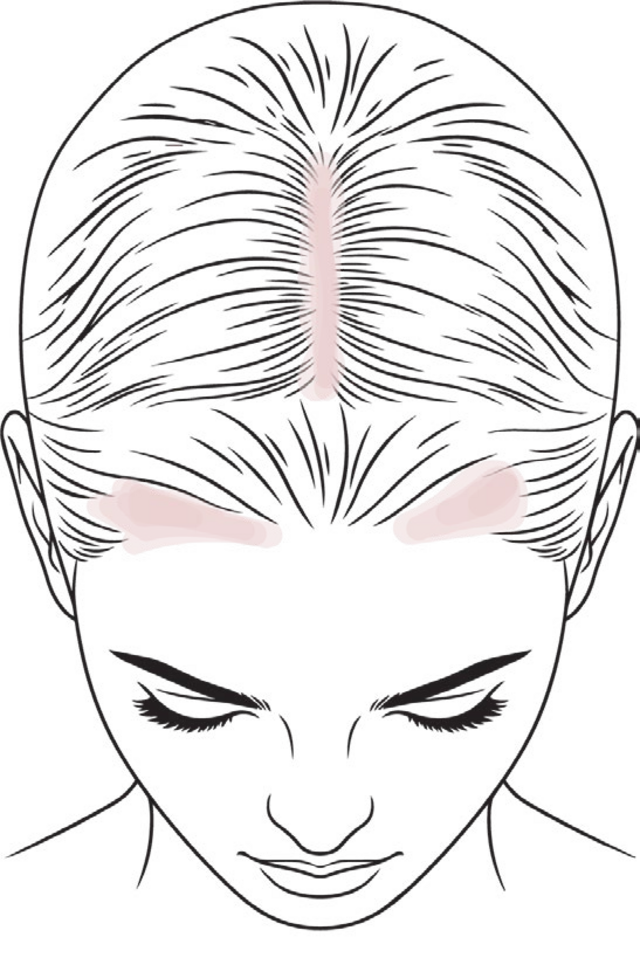
A 40-year-old woman, thinning at the crown and temples.
- Age40
- Presenting concernProgressive diffuse thinning across the crown and frontal scalp, visible scalp show-through, and a female-pattern parting.
- HistoryPerimenopausal symptoms; hair loss began in perimenopause and accelerated after significant weight loss on a GLP-1 medication.
- ImpactIncreased shedding when washing and brushing; reduced hair strength and diameter; significant distress and fear the loss might be permanent.
Supporting the follicle, not suppressing hormones.
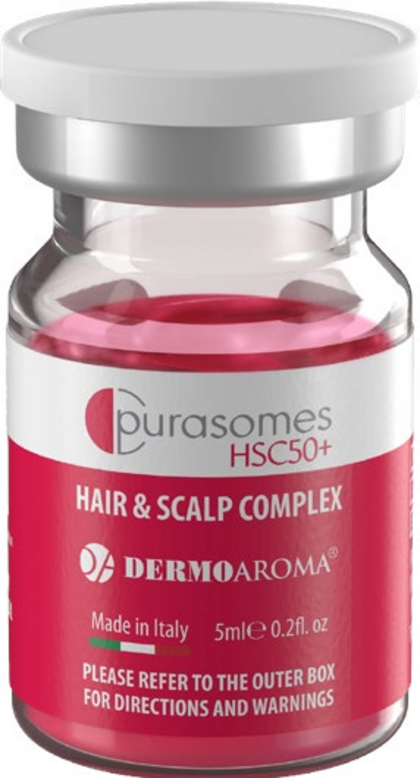
Exosome-based treatments aim to modulate the follicular microenvironment — influencing inflammation, stem-cell signalling and anagen maintenance — rather than acting on hormonal pathways. That makes them well-suited to hormonally-influenced but non-destructive hair loss, where follicles remain viable but functionally impaired.
Figures over four weeks, from the manufacturer’s cited research for Purasomes HSC50+, alongside reductions in scalp redness and transepidermal water loss. Presented as published evidence, not a guarantee of individual results.
Before & after.
Improvement in scalp coverage and hair calibre across the crown and frontal scalp — progressive and incremental, in line with normal hair-growth physiology rather than an acute cosmetic change.
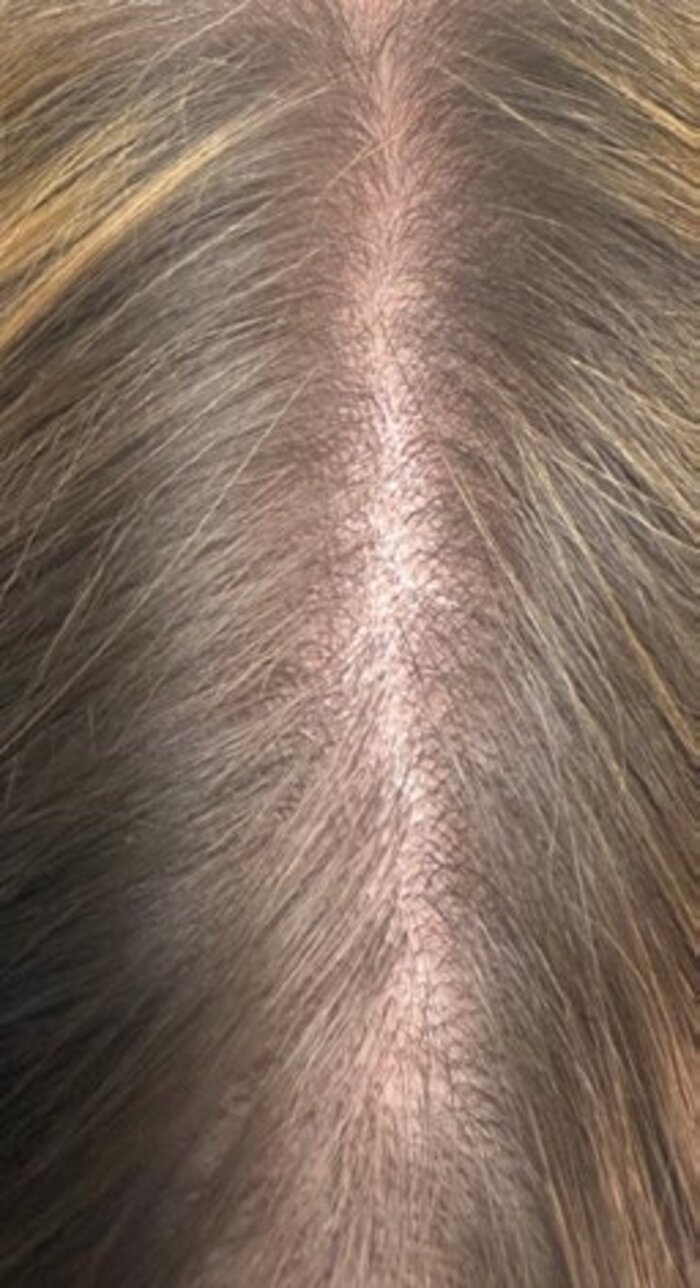
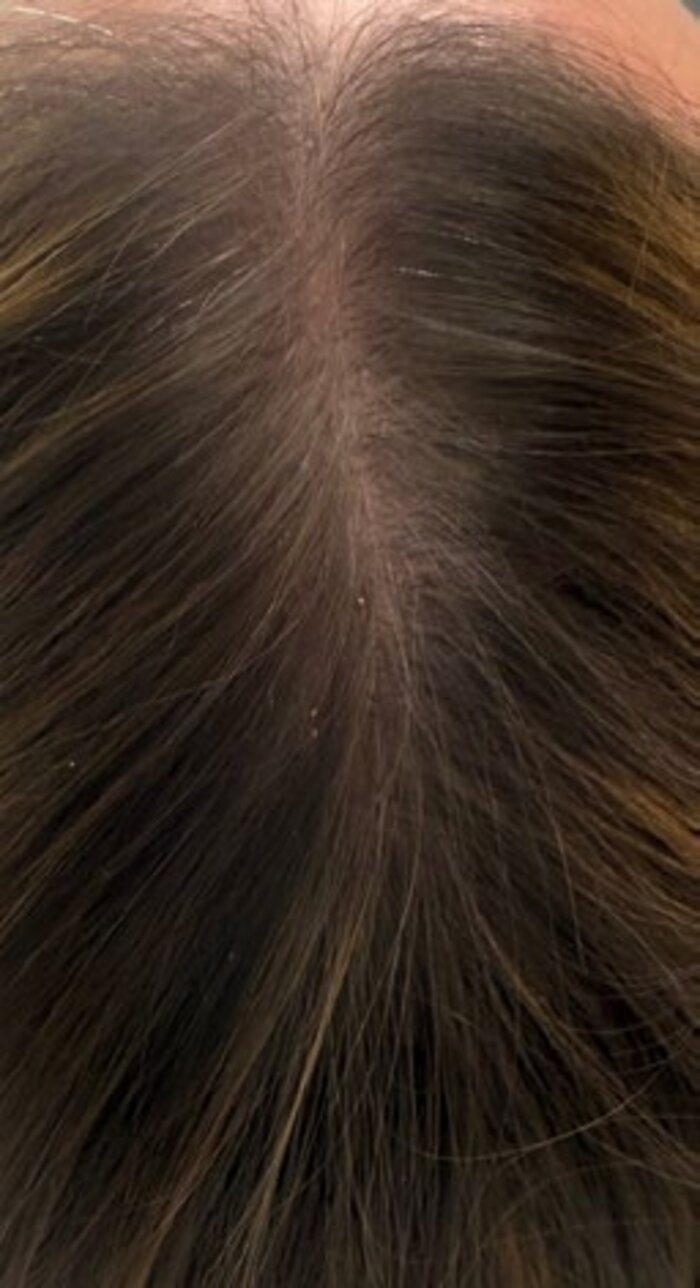
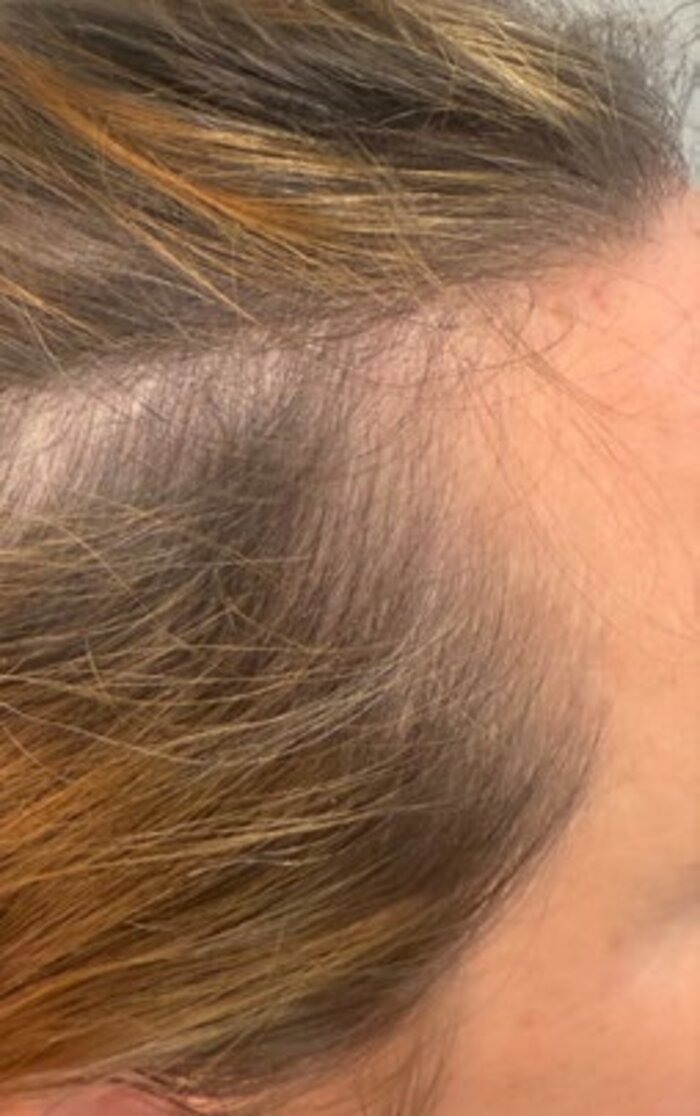
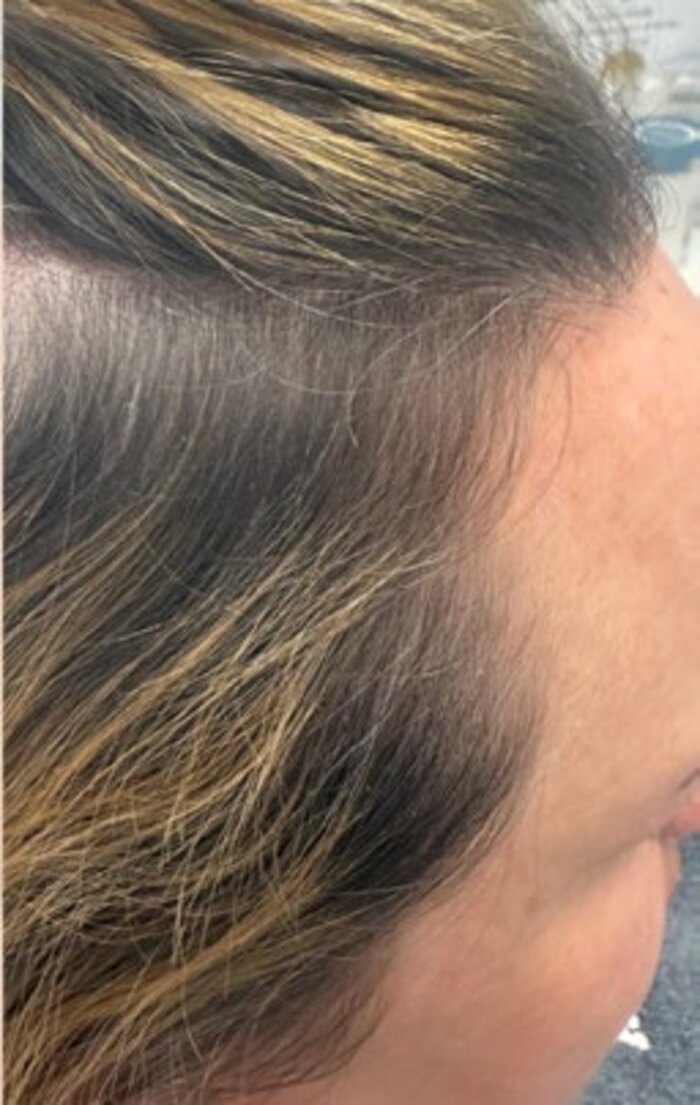
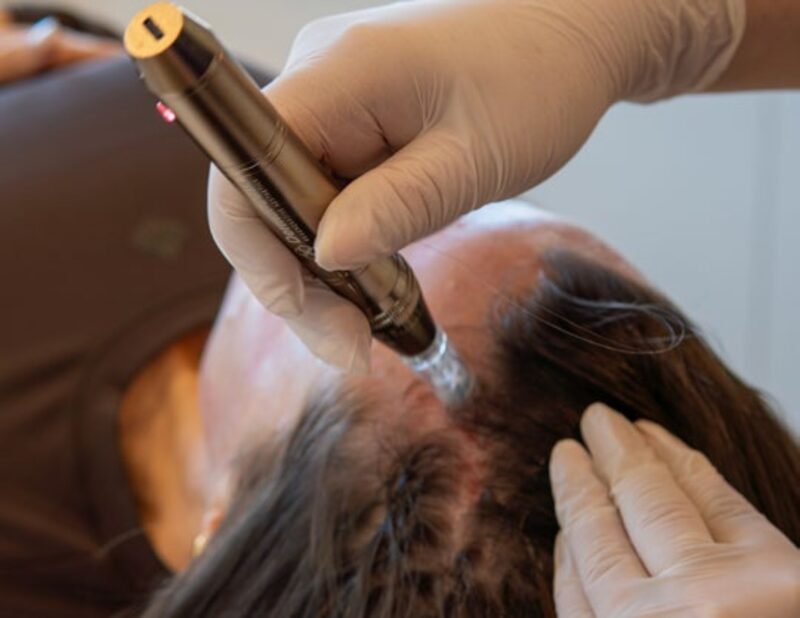
On review, there was visible improvement in scalp coverage and hair calibre, particularly across the crown and frontal scalp — consistent with improved follicular activity and re-entry into the growth (anagen) phase.
Results were incremental and aligned with the expected timeline for recovery in non-scarring, hormonally and stress-related hair loss. The patient continues to be monitored, with continued optimisation of nutrition, hormonal health and lifestyle central to long-term management.